
Reviving the knowledge of Shiva is one of my central purposes, for it will be the first and most essential step toward the establishment of Rama Rajya. The history of India clearly shows that the nation was at its most powerful whenever its rulers were initiated into the Shaiva tradition.
Whether we look at the Marathas, such as Chhatrapati Shivaji Maharaj and Ahilyabai Holkar, or the rulers of Rajputana devoted to Eklinga, like Maharana Kumbha, who was a Param Maheshwara and a scholar of the Trika scriptures; whether we consider the Chola dynasty of the South, which carried the banner of Shaiva Dharma across regions that are today Thailand and Cambodia; or the great kings of Kashmir, such as Avantivarman and Lalitaditya Muktapida; or the emperors of Vijayanagara, including Harihara and Krishnadevaraya, many of these great sovereigns of India were initiated into Shaiva Dharma.
Do you know what Rajyabhisheka truly meant? In the Tantric tradition, abhisheka refers to the process of initiation. In ancient India, before a new ruler ascended the royal throne, a formal Rajyabhisheka ceremony was conducted, during which the ruler received initiation into the Shaiva tradition. This is not merely a speculative claim; numerous scriptures describe this process in detail. For example, the Naimittika Kriyānusandhāna elaborates on the procedure, and similar descriptions are also found in the Śiva Dharmottara texts.
Many of these rulers were also practitioners of Tantra. Consequently, numerous powerful kingdoms of that era functioned, in essence, as Tantric states.
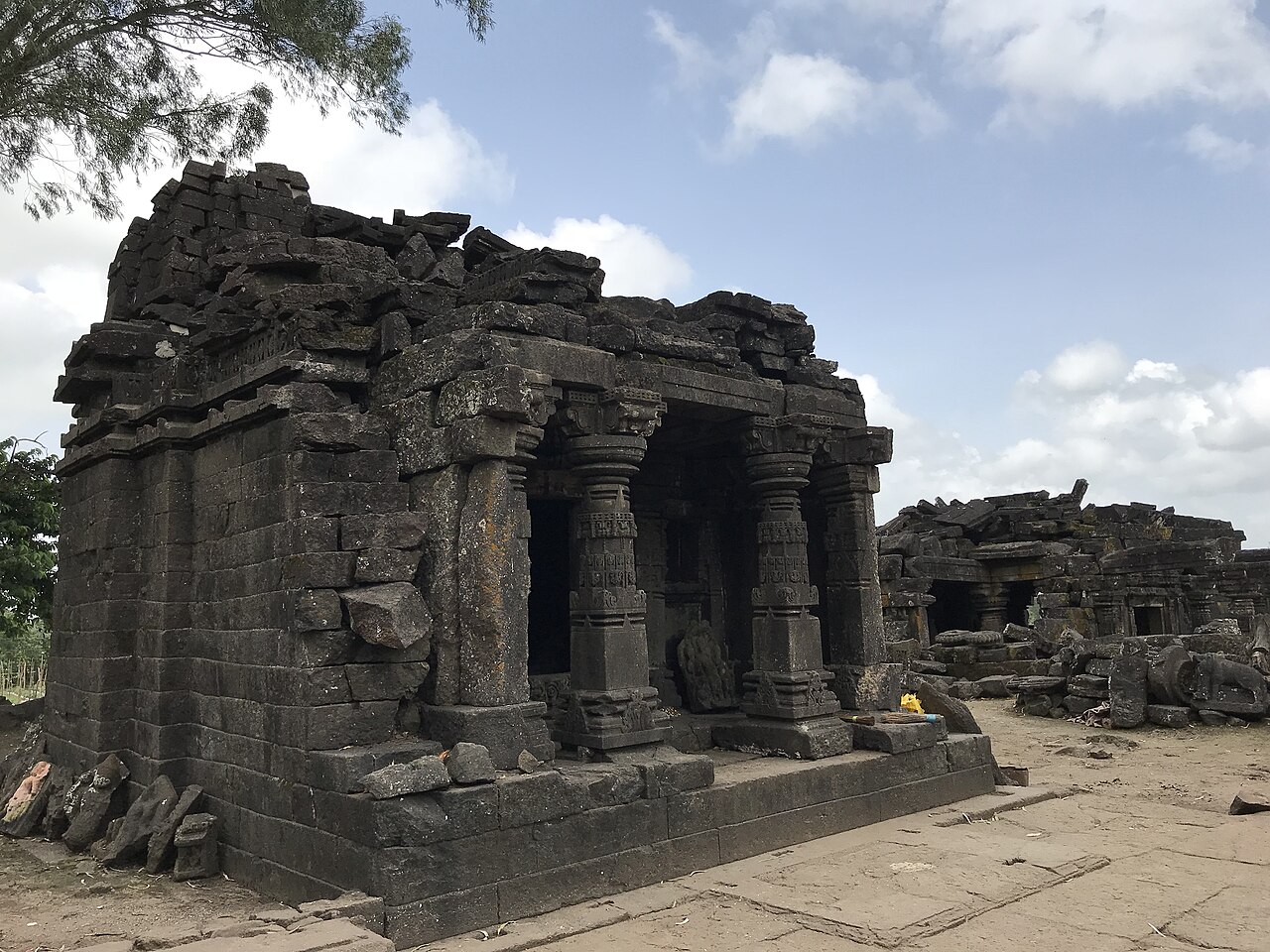
A Tantric state, to a great extent, embodied the vision of an ideal kingdom. In such a realm, the presence of a consecrated Shiva temple was considered essential. A true Shiva temple was not merely a place of worship like ordinary temples. It functioned as a comprehensive center of social, spiritual, and cultural life.
Free center of education and hospitals were integral parts of these temple complexes, where Ayurvedic treatments and medicines were provided without cost. Community kitchens regularly served food to all. The temple premises almost always included a monastery or an ashram, where initiated disciples lived with their guru. There, authentic instruction in the scriptures was imparted, yogic disciplines were taught, and seekers were initiated into spiritual practices.
I will share more about my plans related to this vision.
The consecration of the Linga was also considered essential. The deity was regarded as a living presence and was even treated as a legal entity; in other words, it was Shiva Himself who was considered the owner of the land and the employer of the temple’s staff.
In reality, consecration is an extremely powerful process. When the prāṇa-pratiṣṭhā is performed correctly, an entire region, extending for miles around, is said to become energized. After the consecration, a mirror is traditionally placed before the deity, and it is believed to shatter on its own. In present times, however, some priests manually break the mirror and present it as though it had shattered spontaneously. My intention is to consecrate several temples of Svacchandanātha in such a way that the entire process is openly witnessed by all, including the media and scientists, so that they may directly observe the mirror shattering after the consecration along with the other traditional signs associated with prāṇa-pratiṣṭhā.
This is a very large project for me, and naturally it will require the support of many people. My immediate goal, therefore, is to reach one crore individuals. If Shiva so wills, the moment this YouTube channel reaches one crore, or ten million, subscribers, I will begin the construction of the first temple of Svacchandanātha. Why the number one crore? Because, in a certain sense, even Shri Krishna has given us the principle of statistics.
manuṣhyāṇāṁ sahasreṣu kaścid yatati siddhaye;
yatatām api siddhānāṁ kaścin māṁ vetti tattvataḥ.
In simple terms, among thousands of people who listen, only one truly strives for spiritual perfection. Among thousands of such sincere seekers who genuinely strive, only one comes to know the Divine in its true essence.
Therefore, to fulfill this mission of Rama Rajya, we must kindle at least ten such lamps, ten individuals whose realization can illuminate the world. They will be like ten lotuses whose fragrance spreads across the entire earth. By this calculation, to discover even ten such individuals, it becomes necessary to reach at least one crore people. And it is entirely possible that the lamp, the lotus, may be you—the one who is listening to this message.
However, we cannot wait until the milestone of one crore is reached. To carry forward the knowledge of Shiva and to nurture even those ten rare individuals, initiation is essential. Nearly eighty percent of Shaiva knowledge lies in practice.
Many people have asked why I do not give initiation, why I do not personally teach spiritual practices in my presence, and some have requested that I teach the 112 meditation techniques of the Vijñāna Bhairava Tantra. Others have said that I should begin teaching from the very first step. In response to all these requests, I feel that YouTube alone is not sufficient. I have considered many times the idea of teaching the Vijñāna Bhairava Tantra and even writing a detailed commentary on it, but I do not believe that such an approach would be truly effective. These meditative methods cannot be learned merely by reading about them; misinterpretation is almost inevitable.
Therefore, I will either teach these practices directly in my own presence, or I will prepare a guided meditation for each of the 112 techniques. For both of these paths, however, Samaya Dīkṣā, the initiation of commitment, will be necessary.
Samaya Dīkṣā may be understood as a preliminary or general initiation. Through this initiation, one receives the authority to study the scriptures and to practice the disciplines associated with them. One becomes formally connected to the lineage, and from that point onward is known as a Samayin. A Samayin remains under the spiritual gaze of all the gurus of the lineage, including those no longer in physical form, as well as under the grace of the deities of that tradition.
For example, if I explain the Vijñāna Bhairava Tantra to you and certain aspects remain unclear, and if I am not physically available at that time, you may meditate upon the other gurus of the lineage and the presiding deities, and through that connection the answers to your questions can arise within your own awareness. After Samaya Dīkṣā, one is considered to have entered the kula, the spiritual family of the tradition.
Ordinarily, such initiation is extremely difficult without direct personal contact. It may be given online, though it is challenging and requires careful preparation. However, the initiations that follow—such as those connected with advanced practices or Nirvāṇa Dīkṣā—cannot be conferred online; this is simply not possible. Many individuals who offer online mantra initiations in exchange for money misrepresent the process. This statement may sound harsh, but according to the traditional scriptures there is no authentic provision for such practices, and these scriptures themselves are regarded as revelations of Mahadeva.
Therefore, if any teacher claims, “Purchase this course” or “Take this membership to receive initiation online,” one should remain cautious. In almost all traditional forms of initiation, the presence of the disciple before a realized master is considered essential. The process of dīkṣā itself is conducted almost like a sacred festival, typically involving two or three days of rituals performed within a highly energized spiritual environment.
In earlier times, such ceremonies were held in temples that also housed the guru’s ashram. For example, Survaya ki Garhi was part of a chain of ashrams established by King Avantivarman for his guru, Swami Purandhara, after receiving initiation into Shaiva Dharma from him. The sanctity of that place remains palpable even a thousand years later. The atmosphere of such ashrams was ideal for individuals who wished to dedicate several years of their lives to the full-time study and practice of this path.
These ashrams functioned, in many ways, as spiritual universities, akin to the Sharada Shaktipeeth of Kashmir, which was also a renowned center of higher learning. They served as major hubs of education, literary creation, philosophical debate, and rigorous practice, where large communities of advanced practitioners resided. Many of these institutions were later destroyed during periods of colonization, and over time the very idea of the ashram began to be viewed with diminished regard.
Today, questions are often raised: “What purpose do temples serve?” In some sense, the concern is understandable, because many contemporary temples and ashrams no longer function in the way they once did. In most places, neither authentic spiritual education nor medical service is provided; scriptural debates are rare, and systematic training in yogic practice or formal initiations are seldom conducted.
I live in Purnia, Bihar. Whenever some of you express the desire to meet me, or when anyone comes seeking initiation, I do not conduct such meetings at my residence. The reason is I live in a rented apartment, where I do not have the freedom to perform consecration rituals of any kind, nor is the space designed in a way that allows me to properly teach spiritual practices.
For this reason, I usually invite those who wish to meet me to a Shiva temple. At least, that is how it used to be. Some time ago, when a visitor came to meet me at one such temple, one of the priests there became displeased. Perhaps his ego was hurt by the fact that people were coming to the temple to meet someone much younger, while he himself was not being approached. He stated that I had no right to invite people to the temple. It almost seemed as though he had begun to feel that he himself, rather than Mahadeva, was the owner of the temple. I did not object and simply began meeting visitors at another temple instead.
Later, however, the authorities of that temple appeared to assume that I was charging people money for meeting or teaching them. Indirectly, they began suggesting that if I wished to meet people there, I would have to pay them a fee.
Because of such incidents, and also due to the many requests coming from all of you, I now feel a clear need for a proper place—a dedicated space that can serve as our sādhanā pīṭha, where we can gather together, where initiations may be conducted, and where a temple of Svacchandanātha can be established, along with a gurukul and a hospital.
Naturally, all of this requires land—a sufficiently large piece of land that can become our permanent center. To acquire such land, we will need to raise funds. On my YouTube channel, I have never accepted sponsorships, nor have I ever asked you to purchase memberships, join Patreon, or contribute financially in any similar way. Even monetization was enabled only when YouTube itself started causing problems, as all of you already know. Yet, despite my hesitation, I now find myself needing your support for fundraising so that we may secure the land.
At present, acquiring a very large property and raising such a substantial amount of funds may be difficult, so we will begin on a smaller scale. Honestly, it is not easy for me to ask anything from you; I do not even usually request that you like or subscribe.
Many people approach me wishing to contribute—some offering donations, others volunteering to help with tasks such as video editing or various forms of service—but I often politely decline. It is simply not easy for me to ask anyone to do something for my personal benefit. For this reason, even making this appeal to all of you feels somewhat difficult. Truthfully, I myself do not yet know where such a large mission should begin or whom I should first approach. That is why I felt it right to share this openly with you.
If any among you feel that you can help in this effort, you may contact me. You can write to me at yt.adisuyash@gmail.com, leave a comment, or send a message on Instagram at @adisuyash—any of these channels may be used to reach me. If you possess unused land that you would like to dedicate to this mission, of any size whatsoever, or if you wish to contribute in any other way, or even offer suggestions, please feel free to get in touch. Once the website is completed (which now is) I plan to formally begin a fundraising campaign.
The reason I am investing so much effort into building this website is that it will allow me to teach the practices step by step, beginning from the very first stage, along with Samaya Dīkṣā, through an in-depth program that cannot be conducted effectively on YouTube alone. Those who are still young yet wish to contribute to this mission may do two things for now: first, commit to daily spiritual practice, and second, help this channel reach one crore people.
All of you—Bhairavas and Bhairavis—will play an immeasurable role in fulfilling the mission of Rama Rajya. Never doubt that a small group of thoughtful, dedicated, and steadfast young individuals can transform the world; in truth, whenever meaningful change has occurred in history, it has always been driven by such a group.
Om Namah Shivaya.